Tuesday, 7 February 2017

Singapore: a Quality Country with Quality People

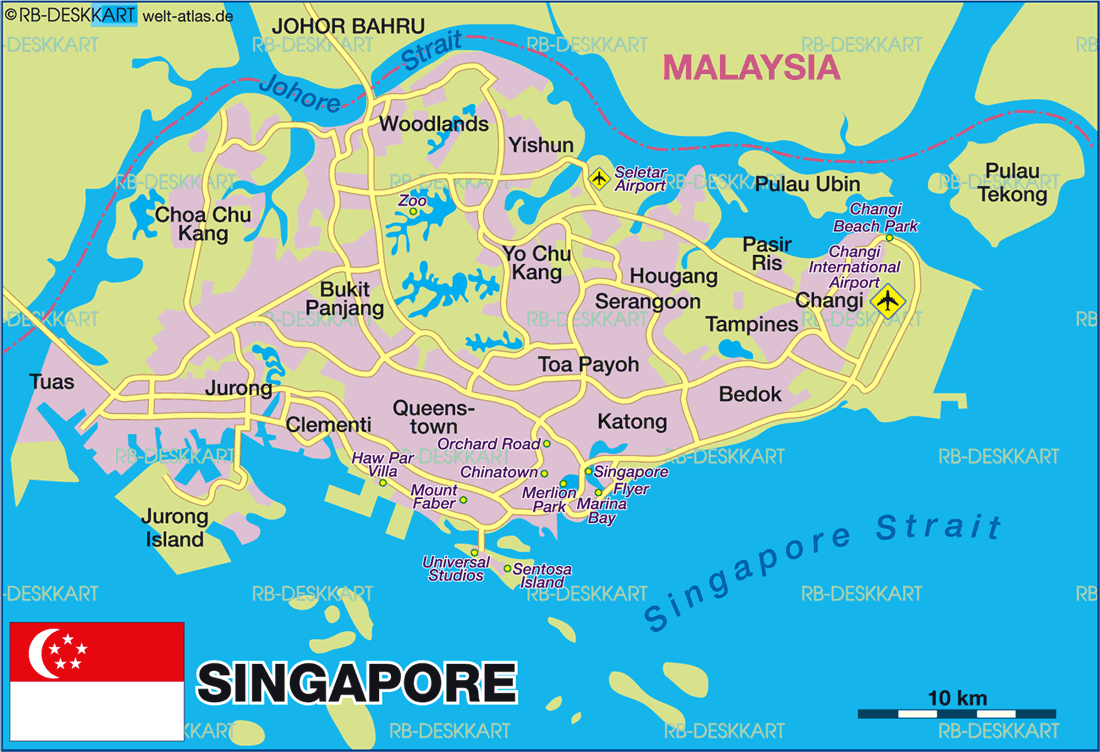
Image result for singapore world map

Singapore is a country located just south of Malaysia. In Singapore all children go to school and there are lots of jobs. So, what else causes Singapore’s quality of life to be so great?
   In Singapore the education system is similar to the system in Canada. At the age of three children can attend a pre-school playgroup. From there they go to kindergarten and primary school for six to seven years. Afterwards they attend secondary school for five years and have the option to attend any of the following: junior college, a polytechnic or arts institution, or university. This is just like in Canada, but the years at each school change. You have eight years at primary school, four years at secondary school, and then have the option for post-secondary education. In Singapore there is no cost for school except for a possible fee of 6.50 Singapore dollars monthly.
Related image
Port in Singapore.
    The workforce in Singapore in mainly based on manual labour through exportation by cargo ships. Since Singapore is almost entirely on the coast of the Malacca Strait this makes sense. The average monthly income for a Singaporean is 8666 Singapore dollars. In Canadian dollars this equates to 8009.58 (almost CA$96108 yearly)! This is understandable, especially because the average Singaporean works forty-four hours per week and has very few vacation days. The government in Singapore is focusing greatly on trying to raise the income for low-wage workers.
   The healthcare system has won many awards, and hospitals in Singapore are some of the largest in the world. The entire system is based on the premise that no health care service should ever be free of charge. This is the rule for any type of mental or physical health, no matter what your economic status! This is just like the system in the USA which seems bad, but in Singapore the government subsidizes costs. This means that for a lower income person a treatment will cost less than if it were for a high income person. In the whole country of Singapore there is only ONE psychiatric hospital! To put this into perspective Canada has more than 15 psychiatric hospitals. The number of traditional hospitals in Singapore is 26 and in Canada is 1,461. Again this seems to be negative but, Canada has more than 11 times the population of Singapore! So, 1000+ hospitals are not necessary.
Related image
Pollution is causing residents to wear masks.
    The pollution in Singapore is a negative factor in the quality of life. Singapore is facing many environmental issues such as, air pollution, water pollution, and deforestation. These are forcing the government of Singapore to focus greatly on creating a plan to reduce the immense pollution that Singapore produces and is affected by. Most of this pollution is because of the residents burning vegetation. They cut down all the trees (deforestation) and then burn the undergrowth to create farm land. This is a real problem and Singapore has started to fine and arrest those found creating these fires.
    Singapore is located just above the equator. Thus it’s climate is very tropical with average temperatures at about 30℃ (86℉). It does not have any definite seasons, though temperatures slightly vary at different times of the year. These hot temperatures are disliked by some residents and loved by others. They also make it less comfortable to work outside.
   Singapore is a southeast Asian country with great health care, education, and quality of life. It has a very high economy even though it creates a lot of pollution. Singapore is a great place to live, if you like hot weather that is!
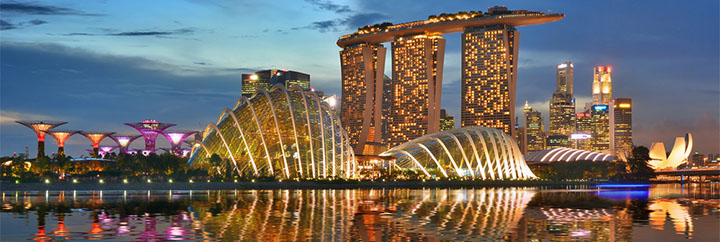
Image result for singapore residents

Wednesday, 1 February 2017

Hockey Versus Ringette: Informational Essay


Have you ever heard of ringette? Ringette is usually compared to hockey but it’s name has become sour. Ringette is an ice sport played by girls and boys, however it is not featured in the Olympics. I created a small survey to find out what people think they know about ringette and hockey. I also asked people what their first impressions of ringette were. Many youth hockey players were extremely blunt. Exclaiming statements such as, “It’s a poor man’s hockey,” “...such a dumb sport,” “Their sticks are like fire pokers.” Youth who play neither sport were unsure what ringette was. Some even claiming it was a type of figure skating. Most ringette players disagree, defending the sport they love and throwing shade to hockey. Though, older players talked about how hockey is just another sport with different rules and different people. Adults seem to be reasonable when thinking about the idea of ringette. Few would even prefer ringette to hockey! Ringette is just as great as hockey, neither is better and both sports deserve credibility. After all, hockey and ringette allow people to make friends and have fun, and isn’t that what sports are all about?  
One of the biggest differences between hockey and ringette is the item used to score. In hockey this is the puck and in ringette this is the ring. The puck is easier to pass with but the ring is much easier to shoot with. The hockey puck is a flat cylinder made out of solid rubber. The ringette ring is a circular, hollow and rubber disc measuring approximately 15.5 cm in width and 3 cm at its tallest point. The hockey puck is 7cm in width and like the ring it is also 3 cm in height. After throwing a puck and ring with equal power at a brick wall, the puck bounced 177 cm and the ring travelled 205 cm. At Home Hardware a ringette ring costs $8.49 while a hockey puck costs almost $6 less at $2.29, illustrating that supply and demand is not in favour of ringette players and coaches. So, whether you think control or passes are more important, it’s undeniable that the puck and the ring are very different!
One of the reasons that ringette isn’t known by many people are the levels and age groups of the sport. In girls hockey (our Kitchener local league) there are six main age groups: novice, atom, peewee, bantam, midget, and intermediate. In ringette the age categories are sorted differently, they are U7, U8, U9, U10, U12, U14, and U19 teams. Also in ringette local league teams are referred to as regional teams and representative teams are known as provincial teams. For girls hockey, in Kitchener, the rep (representative) opportunities are developmental strand (DS), C, B, BB, A, AA, PWHL (provincial women's hockey league), and the Olympic teams. In ringette the provincial opportunities (for Kitchener) are U12PP, U14A, U16A, U19A, and teams in the NRL (national ringette league). You can see how hockey has many more teams that girls can play on. Boys is a completely different story. In boys hockey the levels for Kitchener rep are minor development (MD), A, AA, AAA, OHL (ontario hockey league), NHL (national hockey league), and the Olympics. In ringette boys are not permitted to play above the regional level. Also while hockey is very common on television and games are easily accessible, ringette is not filmed and thus to watch a ringette game it requires more effort. This could be another reason that ringette is less popular. Even though ringette has a lot of the same levels and age groups as hockey, hockey has much more publicity and boys are completely different all together.
Now let’s tackle the obvious differences between the two sports. First the equipment, the only thing different between a hockey goalie and a ringette goalie is the left hand glove and the helmet. Some ringette goalies use a Keely glove. This is like the traditional blocker but the glove is separated from the protective padding, that is in the shape of a circle. Other goalies use a regular player glove, a gel glove or a catcher's mitt.  All ringette helmet’s must have a triangular cage. This is so that the stick does not poke through the square holes in a tradition hockey mask. Player’s equipment is a little more obvious. Player’s have ringette pants instead of hockey pants and they use girdles instead of jills. The other difference for a player is often made fun of by hockey lovers, it is the stick. A ringette stick is a wooden stick with a rubber tip and usually a little tape wrapped around the top. Gameplay differences include: Halves instead of periods (15:15 vs 10:10:12), reverse off-side pass across blue line to enter in opposing zones, 30 seconds to shoot (shot clock), goalie throws the ring, and no one is allowed within the outer blue crease around the net. However,  the size of ice surface and number of players on ice (5+goalie) are the same. it’s undeniable that there are many more differences than similarities between these two winter sports!
All opinions about hockey and ringette are different and there's no real wrong answer. Seeing both sides of the argument and learning more about ringette hopefully has helped you to realize that hockey and ringette are very different but deserve even integrity. Differences are apparent, from the ring to the puck, halves instead of periods, a shot clock and the equipment. Similarities are few but palpable, like the number of players on the ice, the size of the rink, material of the puck/ring, the need for teamwork and endless fun. So, the decision is up to you, will you favour hockey or lean towards ringette?

Friday, 23 December 2016

My Christmas Morning

🎄🎅🎄🎅🎄🎅When I wake up on Christmas morning, it’s like waking up for the first time. I stretch and yawn before realizing what day it is. I start to slide off of my bed and then do a double take as the realization dawns on me, today is Christmas! I rush into my sister’s room and splat right on her bed, shaking her with my new found energy, until she wakes up. She groans and moans longing to sleep for just 5 more minutes. But, then just like me she jolts up and smiles like the Cheshire cat.
Every year my sister and I sprint down the stairs, tripping over our own feet, running to see what Santa brought us. Once we reach the living room we are immediately on our knees. Sneakily peeking at our stockings to discover what gifts lie hidden in the festive, fabric stocking resting beneath the coffee table. After we’ve stolen one too many glances, we search our Christmas tree to find the two loudest bell ornaments we can find.
We swing them around, shaking them and creating clutter, in a desperate attempt to awake our parents from their quiet slumber. The sound rings through our house and echos off the walls and while we bang our bells we also scream “It’s Christmas, it’s Christmas!” My mom and dad can sleep through a lot of noise but, not this monstrosity! They were awake and downstairs with us in a split second.
Finally we were all together, the presents were waiting, and anticipation was growing. We always open our stockings first and thanks to my sister and I they were packed a little more messily than when we had first found them. We teared through them and found brain teasers, a new pair of waterproof gloves, DSI games and everything in between! Usually at this time we take a quick break to eat some treats gifted from neighbours and also to drink some hot cocoa in Christmas mugs (naturally) to warm up. My sister and I always rush through the food so that we can open our presents sooner.

Finally we finish eating and we dive at the mountain of presents underneath our kid friendly Christmas tree. We take turns ripping them open and marveling at their contents. My favourite Christmas gifts are my dog Rosey (2016), my vacation to Dubai (2015) and our Caribbean Disney cruise extravaganza(2014). Wrapping paper is thrown all over the room and ribbons are stuck in our air. It’s a magical day full of surprises, family, love and food!!!!🎄🎅🎄🎅🎄🎅

Wednesday, 23 November 2016

Would you rather be ignored or teased? Bullying week reflection

     "It's better to be teased than ignored". I disagree.

      I think that being ignored is much better than being teased. I think this because I care a lot about my school work. When I was younger I was ignored a lot. It wasn't because my friends were rude but, because I was a very shy child and I never felt inclined to be included. As a result, during class time I was able to get lots of work done with extreme sensitivity and care. This helped me to become the focused student I am today. 
     I feel that it is also important to include that sometimes outside of school I feel more comfortable talking to adults rather than to kids my own age. Whenever I felt ignored I could turn to adults and because I was little they were willing to talk to me. Because of this sometimes I was pegged as a '"teacher's pet" and was teased. Remembering and reflecting on my experiences makes me feel like I would rather be ignored, independent and with relief at home than teased, unproductive and with no hope for a better tomorrow.